Is It Legal to Remove the Gemini Watermark? (2026 Legal Guide)
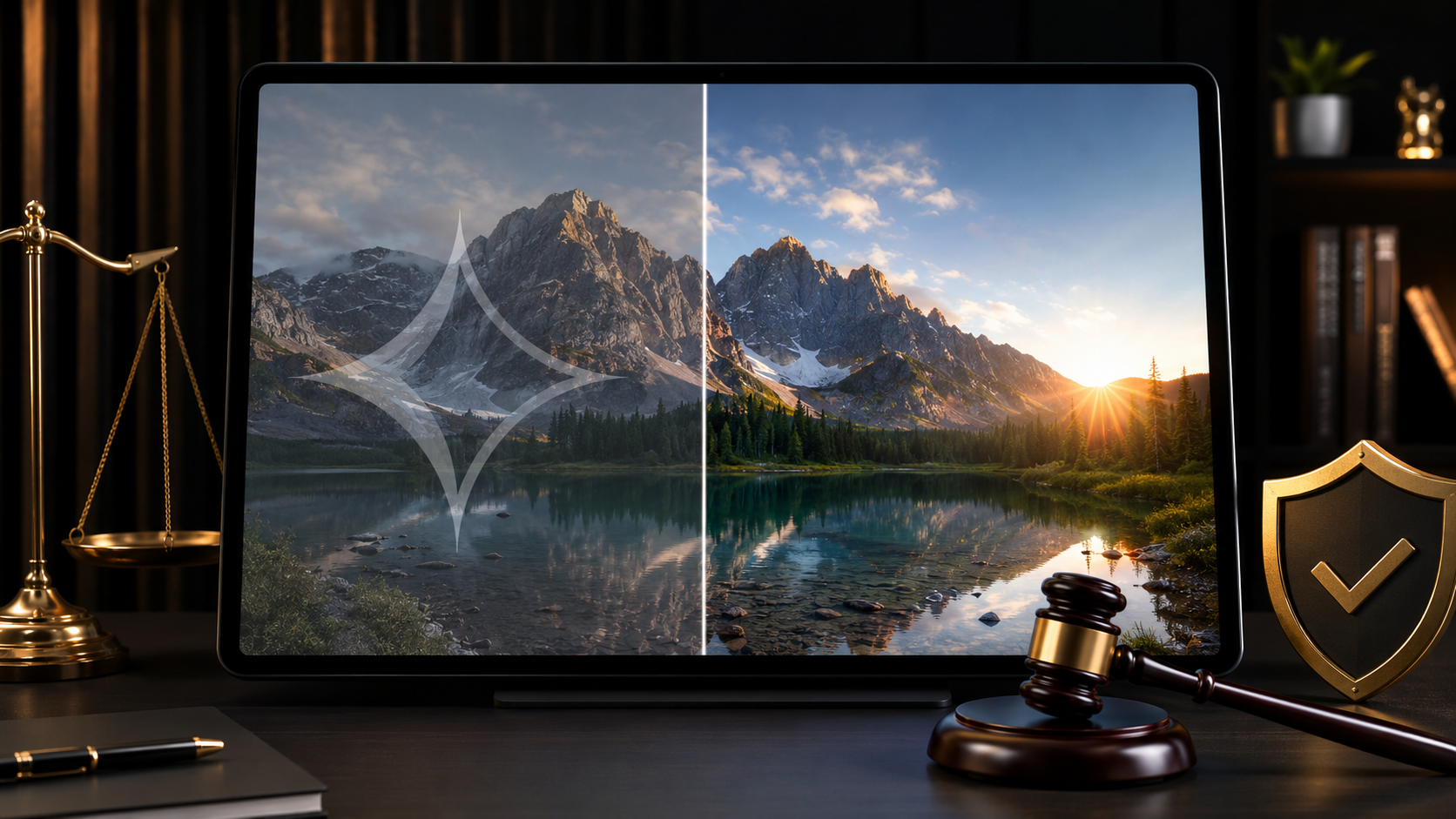
Removing the visible Gemini watermark is generally permitted for both personal and commercial use under Google's terms of service, provided you comply with their foundational content policies. Google does not restrict you from editing or modifying the images you generate, meaning you can freely alter the final output to suit your specific creative or business needs.
However, before making any modifications, you must understand your exact responsibilities regarding transparency and third-party platform rules.
Legal Disclaimer: The information provided in this guide represents general informational guidance and does not constitute formal legal counsel. Digital copyright laws and platform policies evolve rapidly in 2026, especially regarding generative AI. You should consult a qualified legal professional to address your specific situation, particularly if you are operating within strict commercial or journalistic environments.
Many creators worry about the legal implications of altering AI-generated files. Fortunately, current guidelines treat the four-pointed Gemini star primarily as a branding overlay rather than a legally binding copyright enforcement tool. Because current US copyright law requires human authorship, raw AI-generated images do not carry traditional copyright protections. Therefore, removing the visible brand marker does not trigger the severe anti-circumvention penalties associated with stripping digital rights management information from human-authored photography.
If you need a pristine image for a professional presentation or a client deliverable, you can easily generate clean visual versions using our browser tool. While tidying up the visual layer is perfectly acceptable, you must never use a cleaned image to deceive audiences. Always review the disclosure rules of the specific network or publication where you plan to share your final artwork.
What Google's Terms Actually Say
When you review Google's official Terms of Service regarding generative AI, the policy clearly states that Google does not claim ownership over the images you create. The company explicitly permits the commercial use of generated outputs. This means you have the right to monetize, publish, and distribute the images as you see fit. However, this freedom comes with a significant caveat. The terms place the burden of content policy compliance entirely on your shoulders. You must ensure that your final creations do not violate any rules regarding hate speech, explicit content, or deceptive behavior. Altering the image by removing the watermark does not shield you from these foundational content responsibilities.
The Visible Watermark Is Not a Copyright Signal
Because you hold the rights to use the image commercially, you might wonder about the legal status of the watermark itself. It is crucial to understand that the visible Gemini star overlay functions simply as a corporate branding element. It is not a formal rights management tool. Google adds this visual badge to clearly signal that their artificial intelligence model generated the image. The company does not embed the logo to claim traditional copyright ownership over that specific arrangement of pixels.
Current United States copyright law mandates human authorship to grant standard copyright protections. Because raw AI-generated images lack direct human authorship, the United States Copyright Office consistently rules that they do not qualify for copyright protection. This specific legal reality becomes highly relevant when discussing the Digital Millennium Copyright Act. Section 1202 of the DMCA strictly prohibits the removal of copyright management information to facilitate or conceal copyright infringement.
Because the underlying AI image does not possess a valid copyright, the visible star cannot legally act as a copyright management tool. Removing this branding badge from an uncopyrighted AI image does not equate to stripping legal protections under the DMCA. You are simply cleaning up a visual overlay. The law distinguishes heavily between deleting a corporate logo from an AI output and removing a professional photographer's protective watermark from a human-authored stock photo.
What About SynthID? Does That Change Things?
Google utilizes a multi-layered approach to label its AI-generated media. While the four-pointed star serves as surface-level branding, the company also embeds an invisible cryptographic tool called SynthID deep within the pixel data. If you examine the technical differences between the visible watermark and SynthID, you will discover that SynthID operates on a completely different level. It subtly alters the core geometry of the image pixels to create a permanent forensic signature. This signature remains detectable even if a user crops, resizes, or heavily edits the image.
You must understand that SynthID acts strictly as verification technology to promote transparency across the internet. It does not function as a copyright enforcement mechanism. Google developed this invisible tracking system to help social platforms identify synthetic media and combat digital misinformation at scale. Because the image itself still lacks human authorship, the presence of SynthID does not suddenly grant traditional copyright protection to the file. It merely proves that a specific Google model generated the original data.
Utilizing a surface-level cleanup tool to remove the visible star leaves this underlying forensic data completely intact. Our platform specifically targets and mathematically reverses the visible branding overlay without touching the structural data below it. We do not attempt to alter or destroy the hidden cryptographic signature. This means your cleaned image will still accurately register as AI-generated if scanned by specialized detection software or automated social media algorithms. By leaving SynthID untouched, you maintain technical compliance with broader digital transparency initiatives while still achieving the clean visual presentation you need for your projects. This dual reality allows you to format your visuals professionally without stripping away the core identification layer.
When You Must Be Careful
While removing the visible watermark falls within acceptable personal use, you must avoid deceptive practices when publishing your final images. You cannot legally or ethically pass AI-generated media off as authentic human-made photography. Attempting to deceive an audience or a client about the origin of an image violates the core content policies of nearly every major digital platform in 2026.
Social media networks have implemented strict disclosure rules regarding synthetic media. Platforms like Meta and TikTok now require creators to actively utilize built-in "AI-generated" toggles or labels when uploading realistic synthetic content. If you upload a cleaned image that depicts a realistic person, product, or event without utilizing the platform's required disclosure tags, you risk severe account penalties. TikTok, for example, actively penalizes accounts that fail to label realistic AI content, even if the creator removed the original visible watermark beforehand. Therefore, if you use a tool to clean the visual presentation of your file, you must still comply with the disclosure requirements of the network hosting your content.
Furthermore, the regulatory landscape shifts dramatically for commercial entities operating within the European Union. The 2026 EU AI Act introduces strict transparency requirements for businesses deploying generative AI. Under Article 50 of the Act, organizations publishing AI-generated content must explicitly disclose the synthetic nature of the media to their audience. These legal disclosure requirements apply regardless of whether a visible watermark exists on the final image. If your business utilizes AI images in marketing campaigns or public-facing materials, you must implement your own clear labeling strategies to remain compliant with international transparency laws. Cleaning up the image for a polished aesthetic is perfectly fine, provided your overall publishing strategy remains completely transparent.
What GeminiErase Does Not Do
To maintain a secure and legally responsible platform, you must recognize the strict boundaries of what our software can accomplish. Our engine focuses exclusively on reversing the mathematical blending layers of the visible four-pointed star logo. It does not possess the capability to strip or corrupt Google SynthID forensic markers. Furthermore, our platform absolutely does not facilitate the removal of watermarks from traditional stock photography or copyrighted human artwork.
Removing a watermark from a standard stock photo to bypass payment or licensing fees constitutes clear copyright infringement and is highly illegal under the Digital Millennium Copyright Act. Stock photography agencies utilize protective overlays specifically to defend their intellectual property rights. Because our system relies on the specific, uncompressed alpha profiles of Google Gemini assets, it cannot process or remove traditional stock photography logos. We built our tool strictly to help creators tidy up their own AI-generated exports, not to bypass genuine licensing systems.
Practical Guidance for Different Use Cases
Understanding the appropriate boundaries for your specific industry ensures that you remain fully compliant while maximizing the visual quality of your assets.
Personal Creative Projects
If you use generative models for personal artwork, private experiments, or non-commercial hobbies, removing the watermark is completely fine. You face no legal restrictions or disclosure requirements when storing cleaned images on your local machine or using them in private portfolios.
Client Deliverables
If you function as a freelance designer or a digital marketing agency, you can absolutely deliver cleaned images to your clients. However, your professional ethics and contract obligations require you to disclose the generative nature of the artwork to your client. This transparency protects your client from accidentally violating platform policies or advertising regulations when they launch their final campaigns.
Journalism and News Media
If you operate within newsrooms or journalistic outlets, you must exercise extreme caution. Most reputable journalistic associations maintain strict editorial policies that flatly prohibit the modification or removal of AI provenance markers. Editorial teams should check their internal company guidelines and local press regulations, as presenting an unwatermarked AI image as a real news photograph violates core journalistic ethics and public transparency laws.
Frequently Asked Questions
Is it legal to remove the Gemini watermark from my AI images?
Yes, removing the visible brand marker from your own AI-generated images is generally legal. Because current copyright law requires human authorship, raw AI outputs do not qualify for traditional copyright protection. Consequently, cleaning up the visual overlay does not violate the digital rights management protections outlined in the Digital Millennium Copyright Act. However, you must still adhere to specific platform rules regarding synthetic media disclosure.
Does this remove SynthID or only the visible Gemini watermark?
Our extraction tool only reverses the visible branding overlay that sits on the surface of the image. The software does not interact with or corrupt the underlying SynthID forensic markers. Your final cleaned image permanently retains its invisible digital signature. This targeted approach allows you to achieve a professional aesthetic while remaining fully compliant with global technical transparency standards.
Is my image uploaded to a server?
No, our engine processes every mathematical calculation locally within your web browser cache. Your private image files never transfer to an external server or remote database. This strict zero-upload architecture guarantees that you maintain absolute data privacy and security while cleaning your generated digital assets.
Which image format gives the best result?
Lossless formats like PNG and high-quality WebP provide the best mathematical foundation for a flawless extraction. When you utilize our engine to remove the Nano Banana watermark from a heavily compressed JPEG file, you might notice tiny visual artifacts. This happens because lossy JPEG compression permanently discards minor color details, disrupting the strict mathematical correlation our algorithm requires.
Can I use the cleaned image commercially?
Yes, you possess the right to use the resulting clean image for commercial purposes, provided your underlying content complies with Google's baseline safety terms. Keep in mind that deploying AI images in commercial campaigns frequently triggers explicit disclosure obligations under the EU AI Act and modern social media guidelines. Always verify your local regulations before launching a major commercial project.
Conclusion
Navigating the intersection of generative technology and digital publishing requires careful attention to both aesthetics and legal compliance. By understanding the critical distinction between a surface-level corporate brand badge and a hidden forensic signature, you can prepare your digital assets professionally without violating copyright laws.
Need a clean visual version? Use GeminiErase, then follow the platform disclosure rules for your specific use case.